Board games are our family’s main source of entertainment and connection. We also love playing video games together on the Nintendo Switch. So when I heard about the Board tabletop console, a device that blends physical pieces with a screen, I was highly curious. Our family of nine has spent the last few months testing it to see if it delivers on its promise of real connection, and today I am sharing our full Board tabletop console review to help you decide if it belongs at your next game night.
After months of play from age 3 to teens to adults, here’s our honest take on what the Board is, what we play, and whether the $399 price tag is worth it.
What Is the Board Gaming Console?
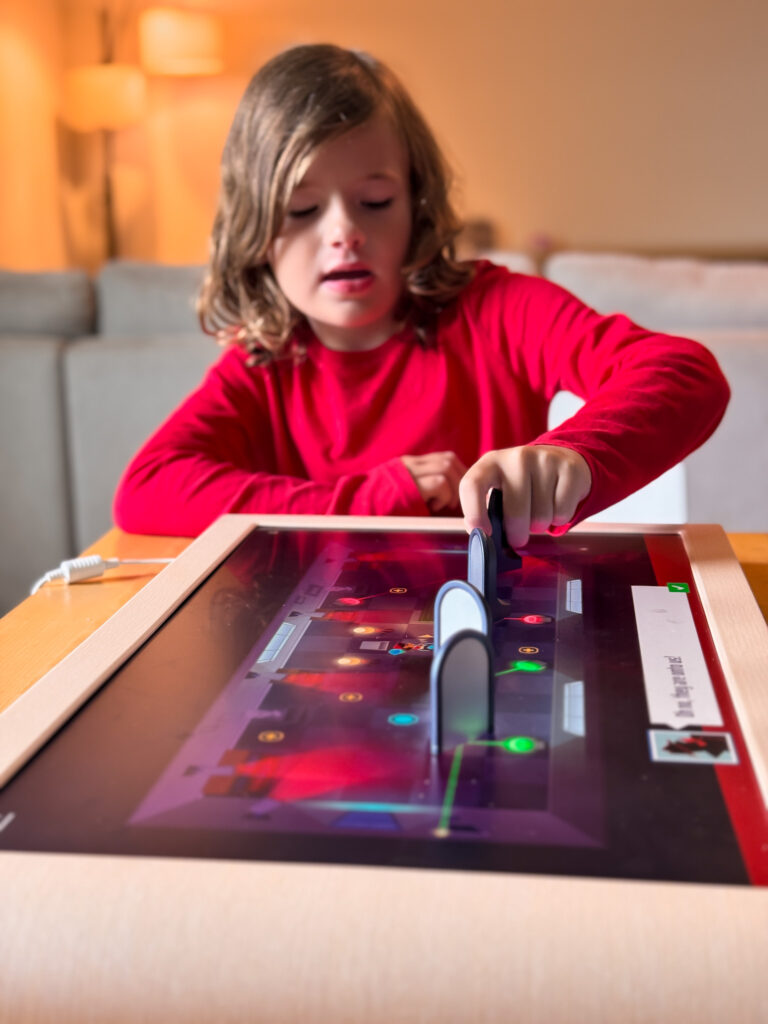
The Board is a 24 inch touch display that lays flat on a table, like a tabletop, and comes with physical game pieces you move around on the screen. The screen reads exactly what piece is where and how it’s moving, so the games respond in real time. It comes with 7 games built in (more on those below), Wi-Fi and Bluetooth, and no controller required.
Why the Physical Pieces Matter
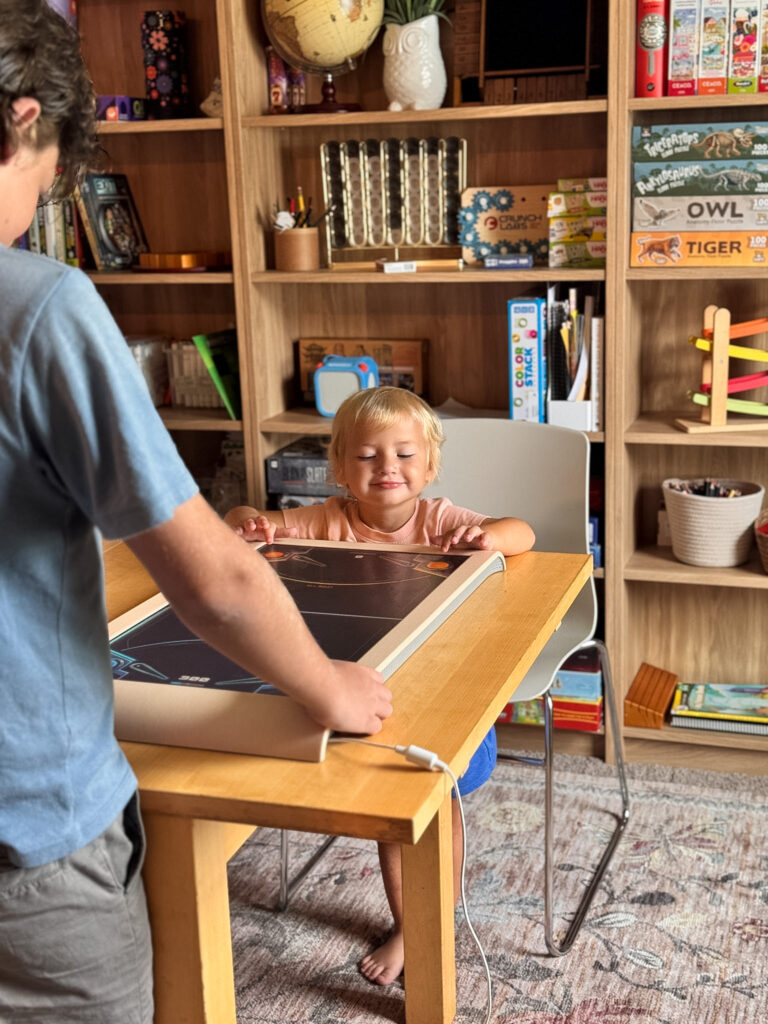
Most video game consoles have a floor. You need a certain level of controller fluency and fine motor skill before a game is playable, and that usually rules out little kids. The Board doesn’t have that floor. You’re moving physical pieces around, not managing a joystick and buttons at the same time, so the barrier to entry drops way down. My 3 year old can pick it up and play, not just watch. That’s the piece (literally) that makes this different from handing a kid a controller.
The Games We Play
You get 7 games with the console itself, and more are available for about $35 each. Each one uses the piece tracking tech in a clever, different way, and that’s what makes playing on the Board feel like nothing else. Here’s what’s getting the most playtime in our house:
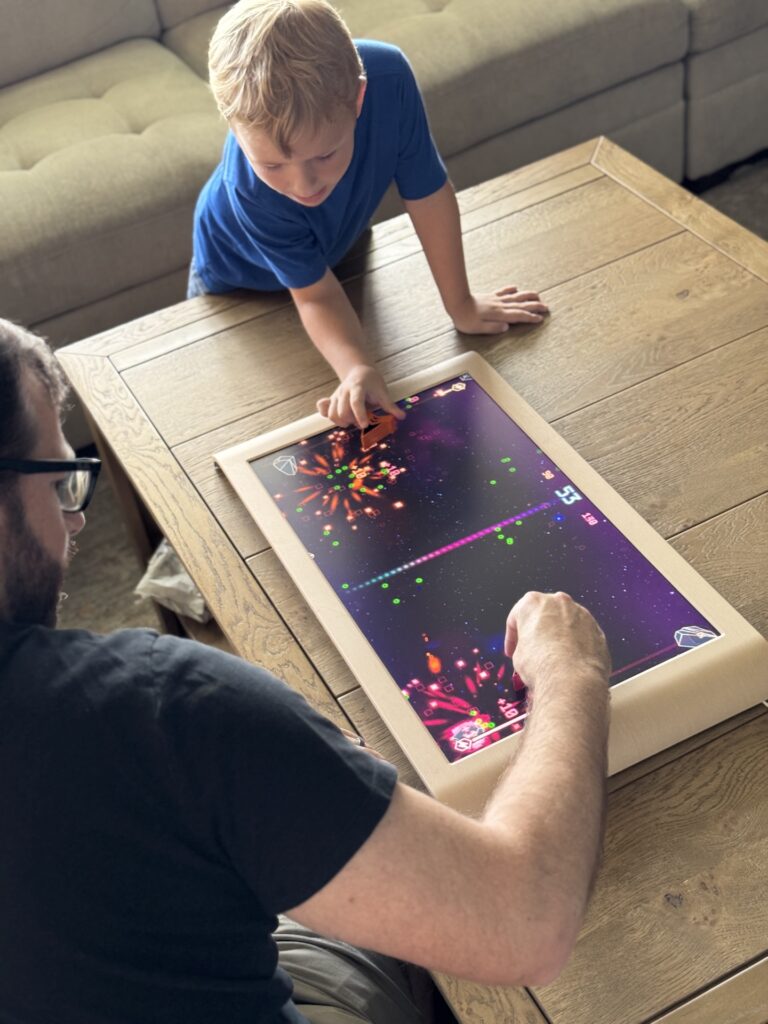
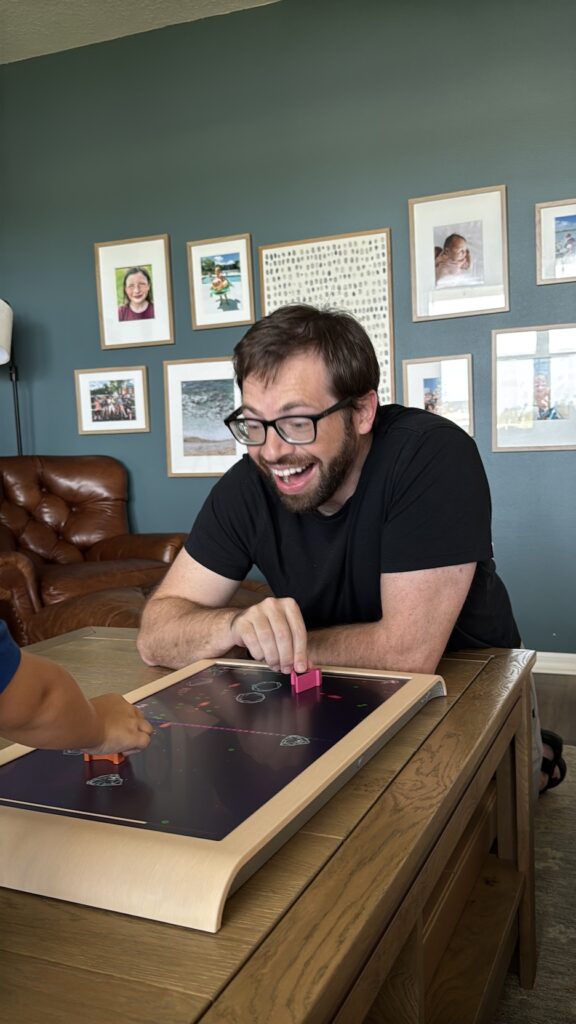
Arcade games. These come standard and are hands down our kids’ most played games on the Board.
Chop Chop. Also included. It’s a cooperative kitchen game, and it’s much more accessible than Overcooked if you’ve played that one. Overcooked ends up being as much a test of controller dexterity as it is a puzzle about managing the kitchen. Chop Chop still gives you that same high intensity rush of trying to get everything cooked and delivered to the right people, but because you’re moving physical pieces, it’s intuitive. My younger kids can jump right in with everyone else. They’re right in on the action. My kids cannot get enough of it.
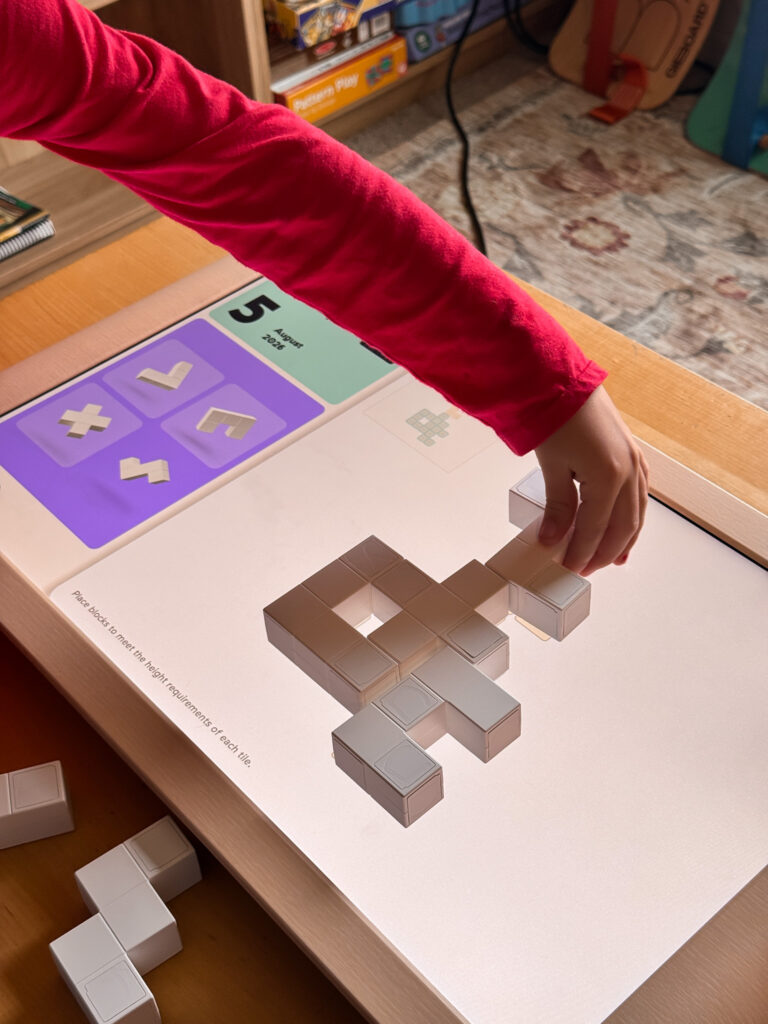
Strata. This is my personal favorite. It’s a 3D strategy puzzle, think Tetris but spatial and physical. It works solo, cooperatively, or competitively, and there’s a daily challenge mode too. This is a game that genuinely could not exist as a physical board game. The way the pieces interact and the way the console calculates everything happening on the board just isn’t possible without the tech.
Omasake. The closest thing to a traditional board game in the lineup. Simple abstract strategy with a fun theme. We love it.
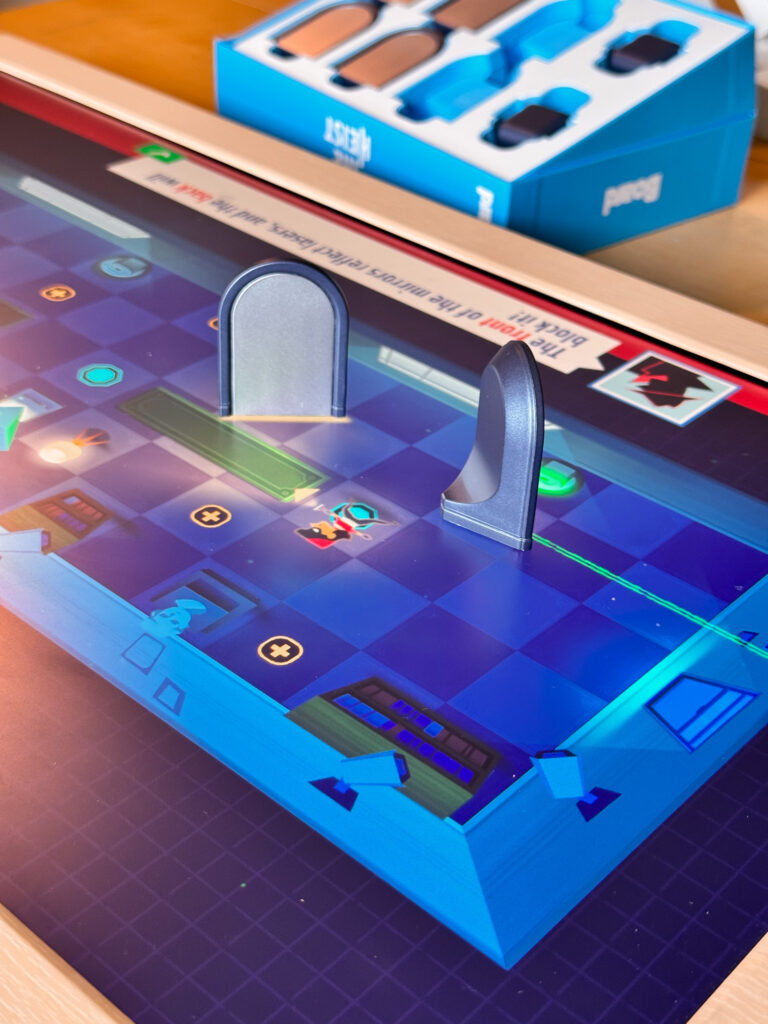
The Heist. A clever laser game where you use mirrors to reflect, block, and redirect lasers to get your thief to safety. The tech is doing something totally different here than in Strata, tracking how light bounces off the pieces you place instead of spatial stacking. Really fun.
Save the Bloogs. A cooperative game where you move pieces to guide the Bloogs safely across the terrain to checkpoints. Cute, and a frequent pick from the kids.
Mushka. An animal care game built for little kids. My 3 to 7 year olds are all in on this one.
Spycraft. You get a physical spy kit and solve puzzles with it. I played through it myself and the way it uses the pieces is genuinely clever, in a totally different way than Strata or The Heist. My older kids liked it too, it takes real thinking to work through.
That’s the real magic of the console. It’s not just that it has physical pieces, it’s that every game finds its own way to use them.
Is This Different From Regular Screen Time?
This is the part that surprised me most. I went in skeptical that a “connection tool” claim from a screen based product would hold up. It does.
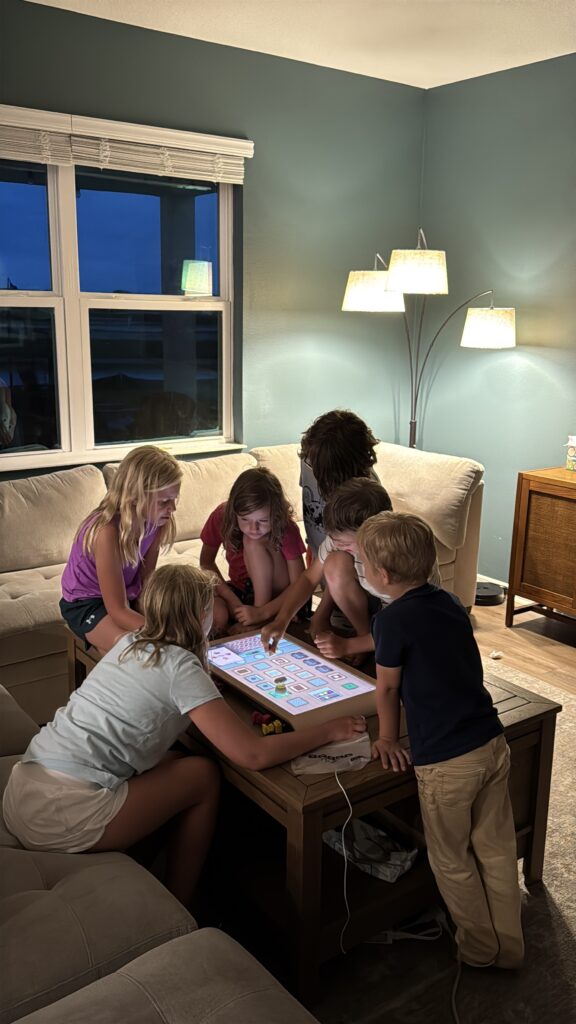
My kids play the Board together, sometimes for a long stretch, and there’s no meltdown when it’s time to stop. They’re engaged with each other, not zoned out in a solo screen experience. I think the physical pieces are what make the difference. It’s a real blend of board game and video game, not a video game wearing a board game costume.
How It Compares to the Switch
It’s a different experience, not a better or worse one. Both are great family consoles to have. If you’re choosing between the Board and a Switch, the Nintendo Switch is more versatile and definitely more portable. The Board isn’t trying to compete with that. It’s its own thing, and honestly unlike anything else we’ve played. We love that the Board gives us a unique gaming feel that the Switch doesn’t.
What I love most is how casual and connected the Board feels. When my kids have friends over, they almost always end up playing something on the Board together. It’s easy to teach to someone who’s never touched it before, and it feels inviting instead of intimidating, so new kids jump right in.
What to Know Before You Buy
Price. It’s $399, which felt like sticker shock at first. But that’s in line with most gaming consoles, and given the tech involved, the physical pieces, and the display, it feels reasonable.
Games run about $35-$45 each. That’s noticeably cheaper than most other video games, and you’re getting physical pieces shipped to you plus the digital game itself. Updates for games you already own are free to download. We updated our Arcade pack and got a new pinball game at no extra cost and it’s been a huge hit with our whole family. Due to it’s newness, the library of games is limited compared to traditional consoles and of course board games themselves. However the variety of styles is nice and they’ve slated 10 new games to release this year.
No subscription. I don’t love subscription gaming models, and the Board doesn’t have one. When you buy a game, you own it.
Wi-Fi, but self contained. The Board does need Wi-Fi, that’s how you download games and updates. But there’s no browser, no YouTube, no chat rooms, nothing that lets kids go elsewhere. It’s self contained to the games you own.
Storage when not in use. This is the one real downside. It’s a large device with a bulky footprint and needs to stay plugged into a wall outlet when being used.
It ships in a nice box you can use for storage and slide under a bed or into a closet. But it’s also designed to look good with a warm hardwood exterior look so we leave ours out on our loft table for extended periods of time to invite play. Because the games are built around connection rather than solo play, I’m comfortable letting the kids have access to it on their own.
Is the Board Gaming Console Worth It?
Yes. For our family it definitely is. If you’re looking for a everything you love about blend of board games and video games, with a real focus on connected play, the Board is worth looking into. The Board feels like its own category of gaming to me, and I’m genuinely excited about what this tech opens up for game design.
Even as a screen conscious family, the Board is built around connection enough that I have no issue with my kids playing it together. It’s a great family focused console with a little something for everyone.
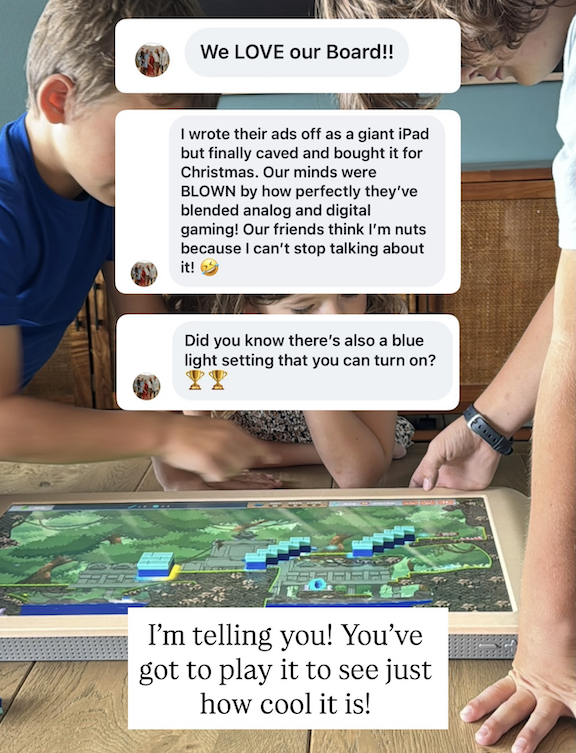
And you don’t just have to take my word for it — here are what another Board family in our audience had to say!
You can learn more about Board and purchase a console here.
If you enjoyed this post on the Board gaming console, then you may also like:
favorite cooperative board games.
best board games for toddlers
Our tips for hosting a board game night.